
Resources › Choosing a community
Choosing a community
10 Warning Signs It's Time for Assisted Living

Debbie Appler
September 28, 2026
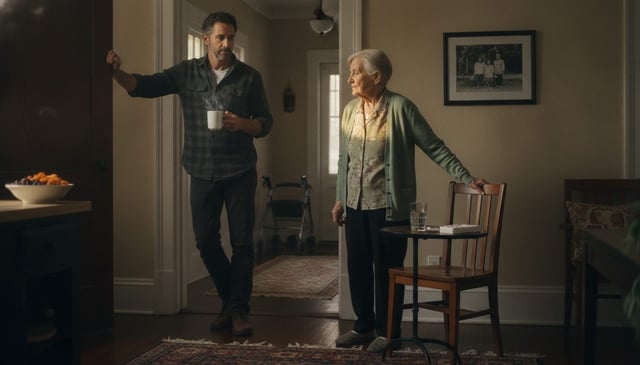
If you’re asking whether there are signs it’s time for assisted living, look for repeated safety failures at home: falls, missed medications, skipped meals, and confusion about daily tasks. The warning signs are practical, not emotional. They show that a parent can no longer keep themselves safe alone, and they give adult children a clear starting point for a calm, respectful conversation.
Physical safety red flags that make assisted living worth considering
The first group of signs is physical. These details are easier to document than feelings, and they often show up before a parent is ready to accept help. A parent can still manage a conversation, a garden, or a favorite recipe while missing the small systems that keep a home safe.
- A fall in the past 90 days, or a near-miss on stairs, in the bathroom, or on a slippery floor.
- Missed or duplicated medications, especially blood pressure, diabetes, heart, or anticoagulant drugs.
- Unopened mail, unpaid bills, expired food, or a home cluttered with hazards.
- A kitchen that is not used, with meals skipped or only dry snacks eaten.
- Inability to bathe, dress, or get ready without assistance.
A fall plus medication errors is a stronger safety signal than either one alone.
Behavioral and cognitive changes that families often miss
The second group is harder to name. A parent may still be polite, still like visitors, and still insist they are fine. The change is in the pattern, not in one bad afternoon.
- Withdrawal from church, bridge, the book club, or calls with old friends.
- New confusion about dates, directions, or familiar places.
- Repeated questions, lost items, or a short memory span for conversations.
- Loss of interest in hobbies that once mattered, or sudden irritability over small routines.
- A change in personality that makes family members feel like they are visiting a stranger.
These behavioral shifts matter because they can affect judgment, money, driving, and the ability to ask for help.
What to document before the conversation
Paper beats memory in these talks. A parent is less likely to dismiss a concern when it is tied to dates, names, and specific events. Keep the list short. Five or six items are enough.
- The date, time, and location of any fall or near-miss.
- Which medications were missed, doubled, or given at the wrong time.
- Which daily tasks now need help: bathing, dressing, meals, transportation, or money.
- Who else has noticed the change, and what they said.
- The parent’s own stated limits, such as not driving at night or not cooking for two days.
The conversation works best when it starts with one concrete event, not a list of failures.
How to have the assisted living conversation with a parent
Start with one concrete event, not a list of failures. Say what you saw, when you saw it, and what you are worried about. When you bring up signs it’s time for assisted living, frame it around safety and quality of life. A parent is less likely to hear a threat when the conversation is about preserving the parts of life they still want.
- Choose a calm moment, not the day after a fall or during a family argument.
- Use one sentence of fact: “Dad, I noticed you missed your blood pressure pills twice this week.”
- Ask what they are afraid of losing: independence, neighbors, control, money, or dignity.
- Offer a next step that is small, like a home safety check or a tour of one community.
- If they resist, do not argue. Say you will keep the option open and ask to revisit it in two weeks.
Respectful repetition is often more useful than a single high-pressure discussion.
When do warning signs add up to a safety risk?
Assisted living is worth considering when one safety sign becomes a pattern, or when two daily-life areas start failing at once. A fall plus medication errors is a stronger safety signal than either one alone. If a parent has stopped managing meals, medications, and transportation, the home is no longer a safe system. That is a practical reason to compare options, not a judgment about their worth.
Look for a pattern across at least two of these areas: mobility, medication, meals, money, or cognition. If you want a second set of eyes, Senior Compass Network offers a free consultation call. According to the source notes, the service is free, unbiased, and not affiliated with any specific communities unless noted. It does not charge families.